A Doctor has inspired this piece. I saw a post online recently claiming that signs of narcissism can be spotted through specific facial asymmetries, expressions, and photo choices. This is a hot take, as it analyses a mere snapshot, a single moment, without knowing the individual’s intent. The individual implied she was able to locate signs of narcissism based on expression. To an extent, I agree. I have witnessed the one-sided lip curl when someone is manipulating another, but there is much more to it. She claimed that narcissists may show one side of their face or wear their hair a certain way. This is when it becomes dangerous territory. Pathologising someone based on how they hold themselves is not an exact science. Individuals shield for all manner of reasons, and generalised statements muddy the waters. If we were to believe you can spot a narcissist by sight alone, oh my – how many tribulations would that save? I dare say it’s not entirely possible. You can learn to listen to your gut instinct if you have been lucky enough to be raised to understand boundaries and red flags, or if you have learned them later in life. But even then, narcissists can be extremely convincing, because they have spent their whole lives rehearsing how to manipulate and control, while others have been learning how to survive and assert their boundaries. It’s imperative to be wary when sources aren’t stated. Unfortunately, within the online community, clickbait has become so rife that statements are often accepted as fact, rather than opinion.
Diagnosing narcissism is dependent on a pattern of behaviours, routines and coercive cycles, whether domestic violence, coercive control, manipulation, financial control, or sabotage. The Hare checklist is a good indicator of whether someone ranks highly on the Narcissistic Personality Disorder Spectrum. Narcissists crave attention and gladly agree that they feel superior to most people. They will rapidly flow through the questions in a grandiose manner, asserting that they are indeed special and above their peers, even when this is evidently not the case.
On the flipside, someone who scores low on the chart will doubt and ponder and might pose introspective questions such as, “Well, I have done this thing on occasion, does that make me a narcissist?”
You could say this is a small number of case studies I have witnessed, or merely anecdotal; without being in a clinical setting, however, it fits with the dynamic of the narcissistic personality, based on Hare’s test. Those scoring high on the Hare checklist are usually less self-reflective, if indeed there is any authentic self-reflection at all, as opposed to their demeanour of “how can this benefit me?” They can perform to a degree. However, there’s a superficial air, and perhaps that truly is when you see that one-sided smirk arise, which the online Doctor mentioned. But there’s a deeper undercurrent, and one can only deeply, intuitively understand by witnessing a long process and pattern of behaviours, which can be parasitical, cause harm with intent, and inherently it is not enough that the narcissist wins; “everyone else must fail.” Inside, they are an empty void. Rather than seeking mutual ground or trying to lift those in their lives, they seek to control, manipulate and destroy. Even those whom they claim to admire or love.
Everyone, at times, is capable of selfish traits. We have evolved to survive, but the capacity to reflect, feel shame, and correct the behaviour and learn from the experience is not something that narcissists would even consider, unless their lives spiral so deeply out of control that they are forced to measure their impact on their victims by external factors. It’s rarely a personal choice for them. It’s concerning to see doctors labelling people as narcissists based on photographs online. We are all aware that social media is a highlight reel and not reality.
Furthermore, it can push blame back onto victims who have been violently or psychologically abused and have already spent years questioning themselves — “Was it my fault he threw that at me? That he punched through walls to intimidate? That he blocked my exit, held a knife to my throat, then told me I couldn’t take a joke?” Even though I was trying to placate him and treading on eggshells, shaking inside because I had learned a survival pattern of spotting the signs of when he would flare up.
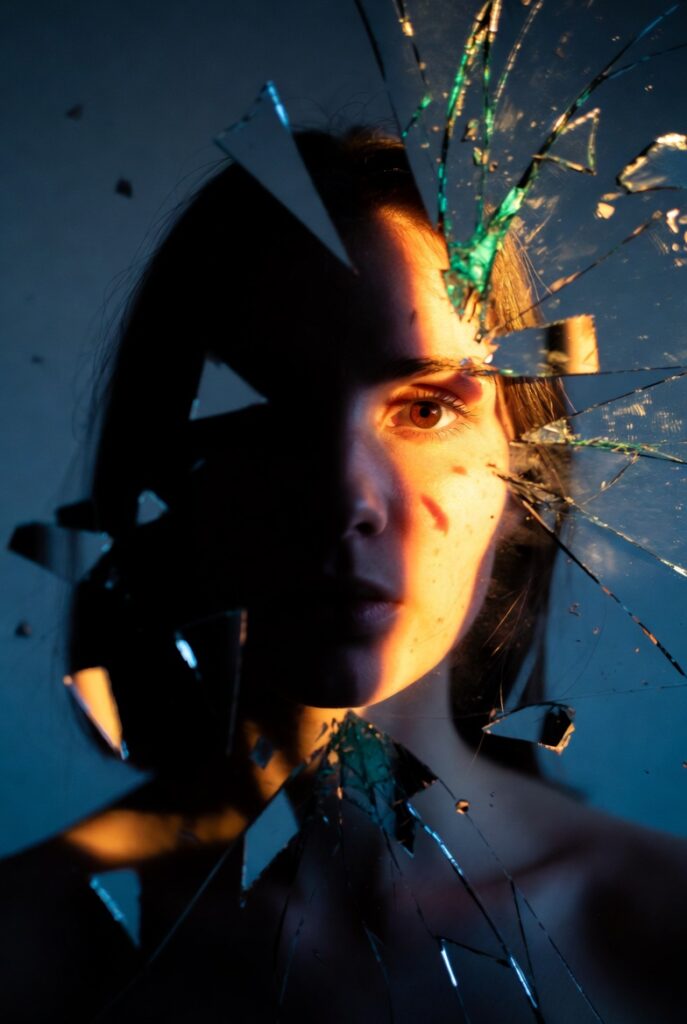
If you are even questioning if you are a narcissist, I would pose that it’s likely you aren’t. That level of self-awareness is rare in those high on the NPD spectrum. We live in an era where we must trust our own instincts, and we must read many book, journals, and medical pages excessively. Seek information that’s backed up by science, rather than absorbing bite-sized chunks of unverified data on social media channels by supposed experts.
I pose a question: Who is more likely to spot and analyse patterns of behaviour, someone who has studied textbooks for four years, or someone who has lived through it, survived, and may pick up traits of hypervigilance, scanning their surroundings and adjusting accordingly to ensure safety?
If you can relate to any of this, therapy is a viable route, but ensure you research your therapist beforehand and that they have a good understanding of the dynamics involved in complex patterns of abuse and trauma response. If you wish to begin the healing process or safeguard yourself from predators, always do your own research, read contrasting information and formulate your own opinions. Then go forth and let your light shine into the world. You are not broken, you are reprogramming your brain. If this resonates, I wish you love and healing on your journey.
